Loft Conversion Architects in London
A well-designed loft conversion is one of the most cost-effective ways to add a bedroom, home office, en-suite or studio without losing any garden. As RIBA Chartered, ARB-registered architects (Reg No. 089055C) we design dormer, hip-to-gable and mansard conversions across London and the surrounding areas — handling everything from the first measured survey to building control sign-off.
Types of loft conversion we design
The right conversion depends on your roof shape, the planning context and how you want to use the space. Rear dormer conversions add the most usable headroom and floor area; hip-to-gable conversions suit semi-detached and end-of-terrace homes by squaring off a sloping side roof; mansard conversions reshape the rear (or both) roof slopes to near-vertical for maximum volume and are common where a strong roofline is wanted; and rooflight (Velux) conversions are the least intrusive option where the existing head height already allows. We assess all of these against your budget and the local planning position before recommending an approach.
Planning permission & permitted development
Many rear dormer loft conversions can be carried out under permitted development rather than a full planning application, provided they stay within the statutory volume allowances — broadly up to 40 cubic metres for terraced houses and 50 cubic metres for detached and semi-detached houses — keep within the existing roof ridge, use materials similar to the existing house and set dormers back from the eaves. Front-facing dormers, mansards, flats, and any property in a conservation area or covered by an Article 4 Direction will usually need full planning permission. We confirm the correct route for your property and, where appropriate, prepare a Certificate of Lawful Development so your conversion is legally certified.
From survey to completion
We begin with a measured survey and concept design, produce scaled existing and proposed drawings and 3D visuals, then submit the planning application or permitted-development certificate on your behalf. Once approved we prepare detailed building regulations drawings, coordinate structural engineering and party wall matters with neighbours, and can manage the build on site through to completion — keeping a single point of responsibility from first sketch to sign-off.
Recent loft conversions
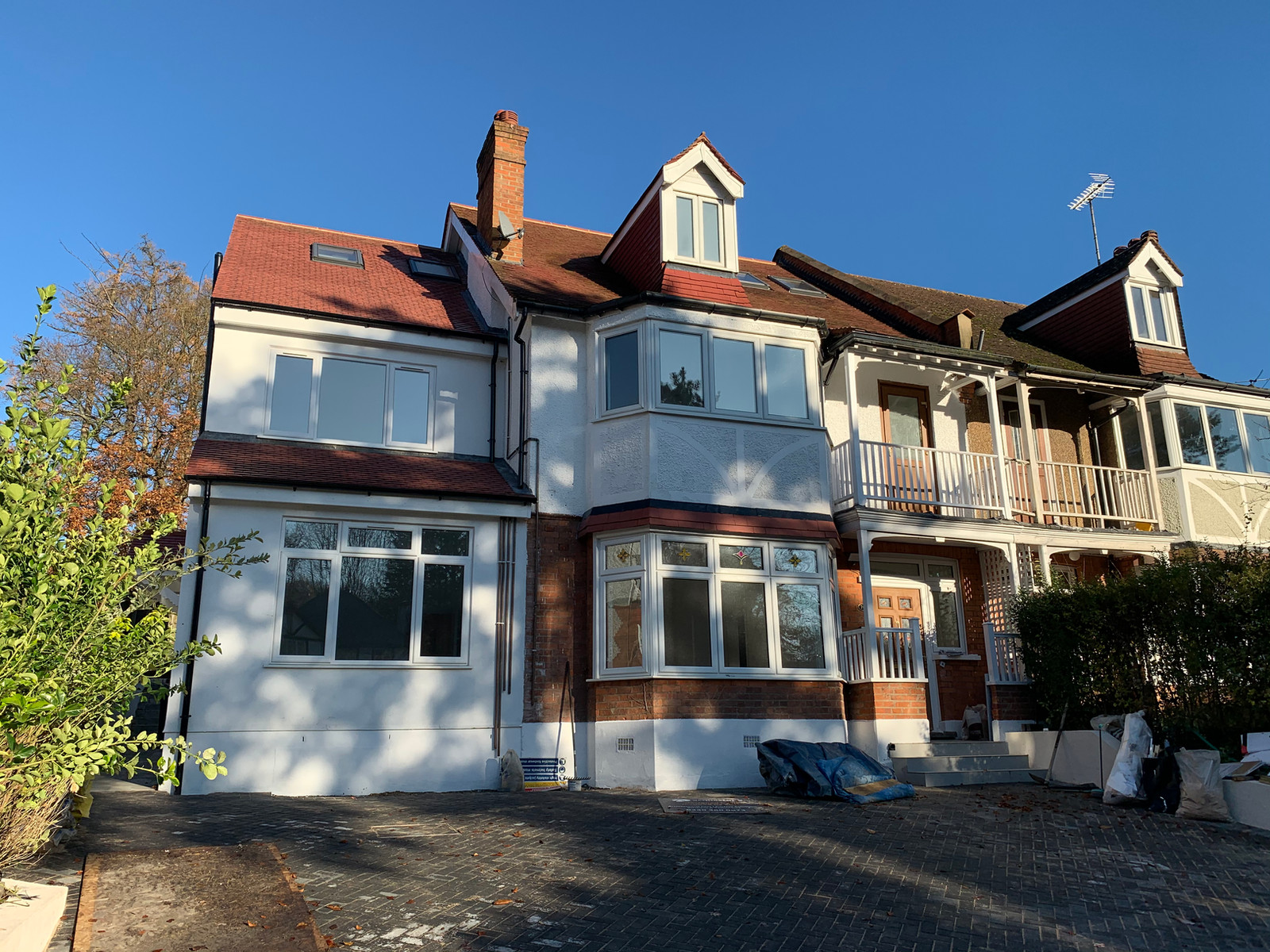
A selection of real, completed Shorplans projects.
Residential Renovation & Loft Extension
Finsbury Park, London
Frequently asked questions
Do I need planning permission for a loft conversion?
Not always. Many rear dormer conversions fall under permitted development if they stay within the statutory volume limits and design rules. However, front dormers, mansards, flats and homes in conservation areas or Article 4 zones normally require full planning permission. We confirm the route for your specific property before any work begins.
How much head height do I need to convert my loft?
As a rule of thumb you want around 2.2–2.4 metres of usable head height at the highest point in the existing loft for a straightforward conversion. Where head height is tight, a dormer or mansard can create the volume needed — we assess this during the initial survey.
What does a loft conversion involve from your side?
Survey and concept design, planning or permitted-development approval, detailed building regulations drawings, structural and party wall coordination, and — if you'd like — full management of the build on site. You can engage us for the design and planning stages alone or for the whole project.
Planning a loft conversion?
Tell us about your project and we'll send a free, no-obligation fee proposal tailored to your home and site.
Step 1 of 4
Project