A property's planning use follows its actual lawful use, not just an estate agent's description or a business-rates entry. Changing occupation can require permission even when there are no visible building works.
01
Establish the existing lawful use
Check planning decisions, approved plans, conditions and evidence of the actual activities. Changes within a use class may not require permission, but conditions and other restrictions can alter the position.
Mixed uses, live-work premises and buildings with more than one planning unit require careful analysis. Do not choose the preferred future use class first and assume the existing building fits the route.
02
C3, C4 and larger HMOs
C3 generally covers dwellinghouses. C4 covers small houses in multiple occupation for between three and six residents living as more than one household and sharing facilities. Larger HMOs generally fall outside those classes as sui generis uses, subject to assessment of the facts.
A C3-to-C4 permitted development right can be removed by an Article 4 direction. Planning use and housing licensing are separate: a lawful C4 use does not itself provide an HMO licence or establish that a room meets licensing standards.
03
C2 is not a general investor alternative
C2 covers specified residential institutional uses, including certain care-related accommodation. Whether a particular supported-living arrangement is C2, C3 or another use is fact-sensitive, including the nature of care and the way residents occupy the premises.
Obtain specialist planning advice for the real operating model. Relabelling a shared house as supported accommodation does not automatically change its lawful use or remove licensing and building-control duties.
04
Commercial to residential
Some changes from eligible commercial uses to dwellings can fall under specific permitted development classes, such as Class MA for qualifying Class E premises, with prior approval and detailed conditions. Do not assume every shop, office or café qualifies.
Check the current legislation for exclusions, lawful-use history, Article 4 restrictions and the prior approval matters applicable to the proposal. External alterations may require separate permission. Building regulations, adequate living conditions, fire safety and access must still be resolved.
05
Test the finished use as well as the route
Assess refuse, cycle parking, access, noise, ventilation, daylight, drainage and services alongside the proposed occupation. For conversions, structure, sound insulation and fire compartmentation can be major feasibility issues.
If the business model or intended occupancy changes during design, reassess both planning and licensing before signing a lease, purchasing or starting work. A permission for one operating model should not be assumed to authorise another.
Checklist
Points to confirm before you commit time or money.
- Establish lawful existing use and the planning unit.
- Describe the actual intended occupancy or business model.
- Check conditions, Article 4 directions and the exact statutory route.
- Coordinate licensing, building regulations, structure, fire safety and services.
From our projects
Real Shorplans work, and why it is relevant here.
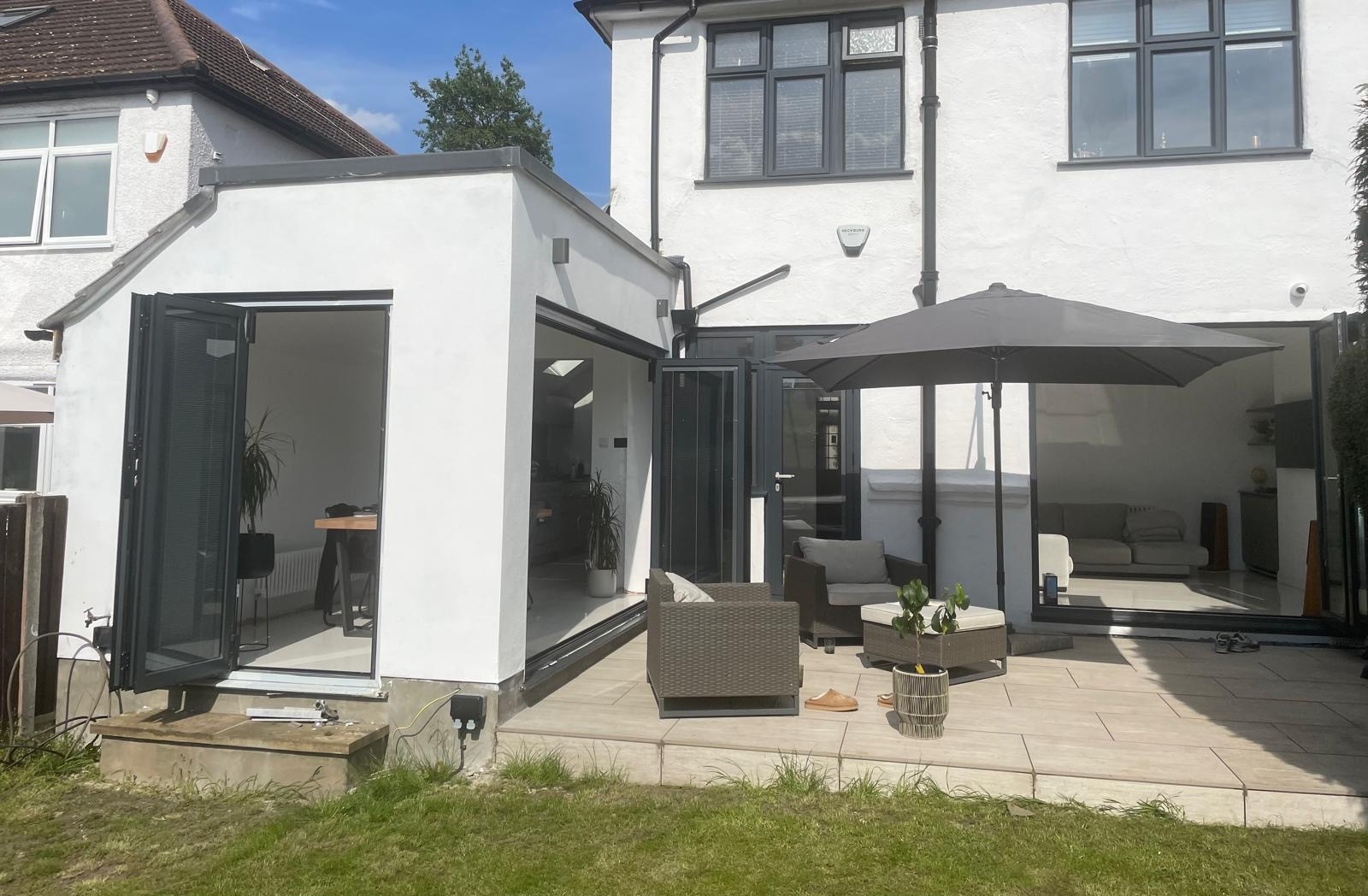
Carshalton, Surrey
Single story side extension scheme
Why it is relevant: The Purley five-unit apartment conversion is a published residential conversion example, including extensions and loft work. It illustrates the need to coordinate the building as a whole; it is not presented as a C2, C4, HMO or Class MA project.
Single story side extension scheme to create a new dining area into an open plane kitchen , generous glazing for natural light, and efficient use of space for modern living.
View related projectsOfficial sources
General guidance for England, with a London focus. Requirements depend on the property, proposal and current rules. This is not a site-specific design, legal opinion, fixed quotation or guarantee of approval. Check the linked official guidance and obtain project-specific professional advice before acting. Last reviewed .
Applying this to your property?
Tell us about the building and what you want to achieve. We will reply with how we would approach it and a fee proposal.