Receiving a notice does not mean you must accept unsafe work, and dissenting does not necessarily stop a neighbour's lawful project. The useful first step is to understand the proposed work, the notice and the protections available under the Act.
01
Read and check the notice
Identify the building owner, the property, the proposed operation, the notice category and the intended start. Ask for clear drawings where the work or excavation relationship is difficult to understand.
Check whether all relevant owners have been addressed, particularly for leasehold buildings or multiple flats. A boundary uncertainty or unclear ownership can require legal advice in addition to party wall surveying. Keep the notice and record when it was received.
02
Consent is an active choice
Written consent may be reasonable where the proposal is understood and concerns have been addressed. It should not be confused with planning permission or an agreement to give up unrelated rights.
Consider a recorded schedule of condition and clear contact arrangements even where you consent. Do not sign a document you do not understand, or assume an absence of reply gives you indefinite extra time.
03
Agreed surveyor or one each?
For a dispute under the Act, both owners can appoint one agreed surveyor, who must act impartially in the statutory role. Alternatively, each owner can appoint their own surveyor, with the statutory arrangements for resolving matters between them.
The agreed-surveyor route may reduce duplication, but both owners need confidence in the appointment. Separate appointments may be appropriate for a complex case. Ask about competence, scope, communications and fees rather than assuming one option is always better.
04
What protections can be considered?
The surveyor can address matters within the Act such as construction details, reasonable protection, working arrangements and access. A schedule of condition can provide an agreed baseline for later assessment of alleged damage.
The process does not replace the council's planning assessment and is not a general veto over development. Concerns about noise nuisance, trespass, boundaries or dangerous work may need separate routes and advice.
05
Stay involved during the work
Keep records of communications and report suspected damage promptly through the agreed channels. Photograph the concern without entering an unsafe site. Let the appointed surveyor assess disputed matters rather than accepting an informal on-the-spot settlement under pressure.
If work begins without a required procedure, seek appropriate professional advice promptly. Do not assume the existence of planning permission resolves the issue or that a late informal document necessarily fixes it.
Checklist
Points to confirm before you commit time or money.
- Record receipt and understand the proposed work.
- Check the response period and take advice promptly.
- Choose consent or the appropriate surveyor appointment route deliberately.
- Agree a condition record, contacts and a way to report concerns.
From our projects
Real Shorplans work, and why it is relevant here.
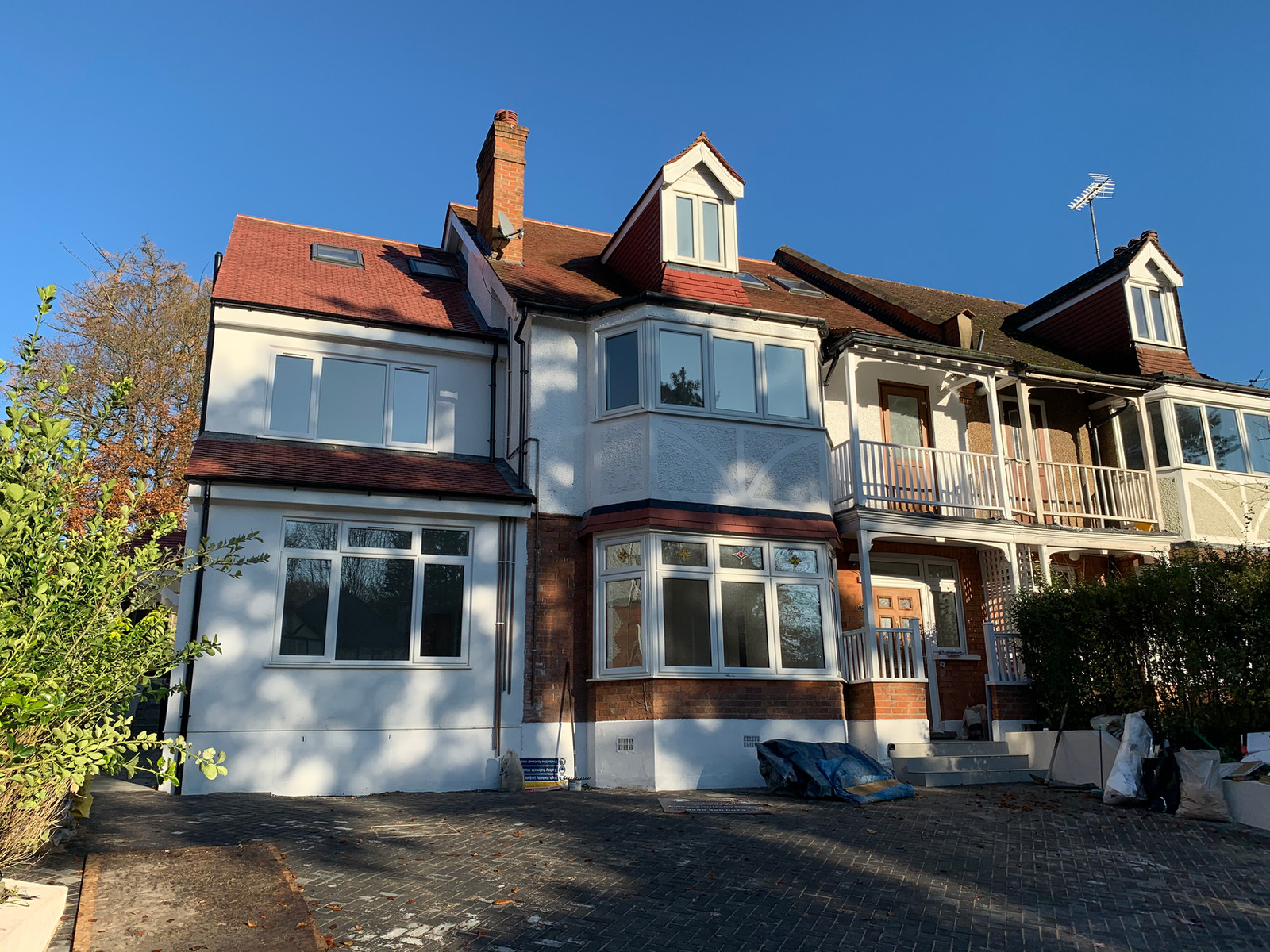
Finsbury Park, London
Residential Renovation & Extension
Why it is relevant: The Finsbury Park renovation includes basement, side infill and dormer work, a useful example of a multi-part brief for neighbours to understand. No neighbour dispute or condition of adjoining property is reported in the portfolio.
Comprehensive renovation including a new basement kitchen and dining space, infill side extension, and dormer loft conversion — delivering a four-bedroom, three-bathroom family home. High-performance glazing, skylights, and light wells ensure excellent daylight penetration throughout all levels. Brickwork matched sympathetically to the existing Finsbury Park façade.
View related projectsOfficial sources
General guidance for England, with a London focus. Requirements depend on the property, proposal and current rules. This is not a site-specific design, legal opinion, fixed quotation or guarantee of approval. Check the linked official guidance and obtain project-specific professional advice before acting. Last reviewed .
Applying this to your property?
Tell us about the building and what you want to achieve. We will reply with how we would approach it and a fee proposal.