A hot-food takeaway is not automatically authorised because the unit was previously a shop or café. The actual balance between on-site dining, collection and delivery affects the planning use, and the physical impacts need their own assessment.
01
Establish the correct use
A hot-food takeaway with food mainly consumed off the premises is generally sui generis rather than Class E. A café or restaurant may be Class E, but a label on a menu or lease does not decide the lawful use.
Describe the operating model accurately: cooking processes, seating, collection, delivery riders and hours. Mixed or changing operations need a fact-specific planning assessment. Check the existing permission and conditions before assuming a change is allowed.
02
Check local policy before fitting out
Councils may have policies on takeaway concentrations, proximity to schools, town-centre uses, health and neighbour amenity. Establish the actual adopted policy and site context rather than relying on another borough's approval.
Consider access, servicing, rider waiting areas, waste and hours. A proposal that is physically buildable can still be unacceptable in planning terms at a particular location.
03
Extraction, odour and noise
Provide a competent extraction design with sufficient detail to assess duct siting, discharge, filtration, odour control and maintenance. Noise assessment may be needed for fans, plant and the operating activity.
Upper-floor homes and neighbouring windows are particularly important. An extraction route dependent on land or roof space outside the lease can be a fundamental constraint, not a detail to solve after permission.
04
Common refusal risks
Uncontrolled odour or plant noise, unacceptable late-night activity, harmful flue appearance, inadequate evidence and conflict with local location policies can all weaken a proposal. Address the specific concern with design and evidence, not generic assurances.
If the council refuses the proposal, compare an amended operating model or physical design with an appeal. A late-night licence and planning permission are different regimes; securing one does not guarantee the other.
05
A coordinated opening programme
Resolve landlord consent, building regulations, fire risk management, food-business registration and any premises licence or late-night-refreshment requirements. Hot food or drink supplied between 11pm and 5am can require late-night refreshment licensing, subject to exemptions and local arrangements.
Keep the approved operating limits and extraction-maintenance requirements in the business handover records. Changes in hours, equipment or delivery intensity may need further review.
Checklist
Points to confirm before you commit time or money.
- Describe the actual trading and delivery model.
- Check lawful use and local takeaway policy.
- Prove extraction, acoustic and landlord-access arrangements.
- Coordinate planning, licensing, food registration and fire/building-control requirements.
From our projects
Real Shorplans work, and why it is relevant here.
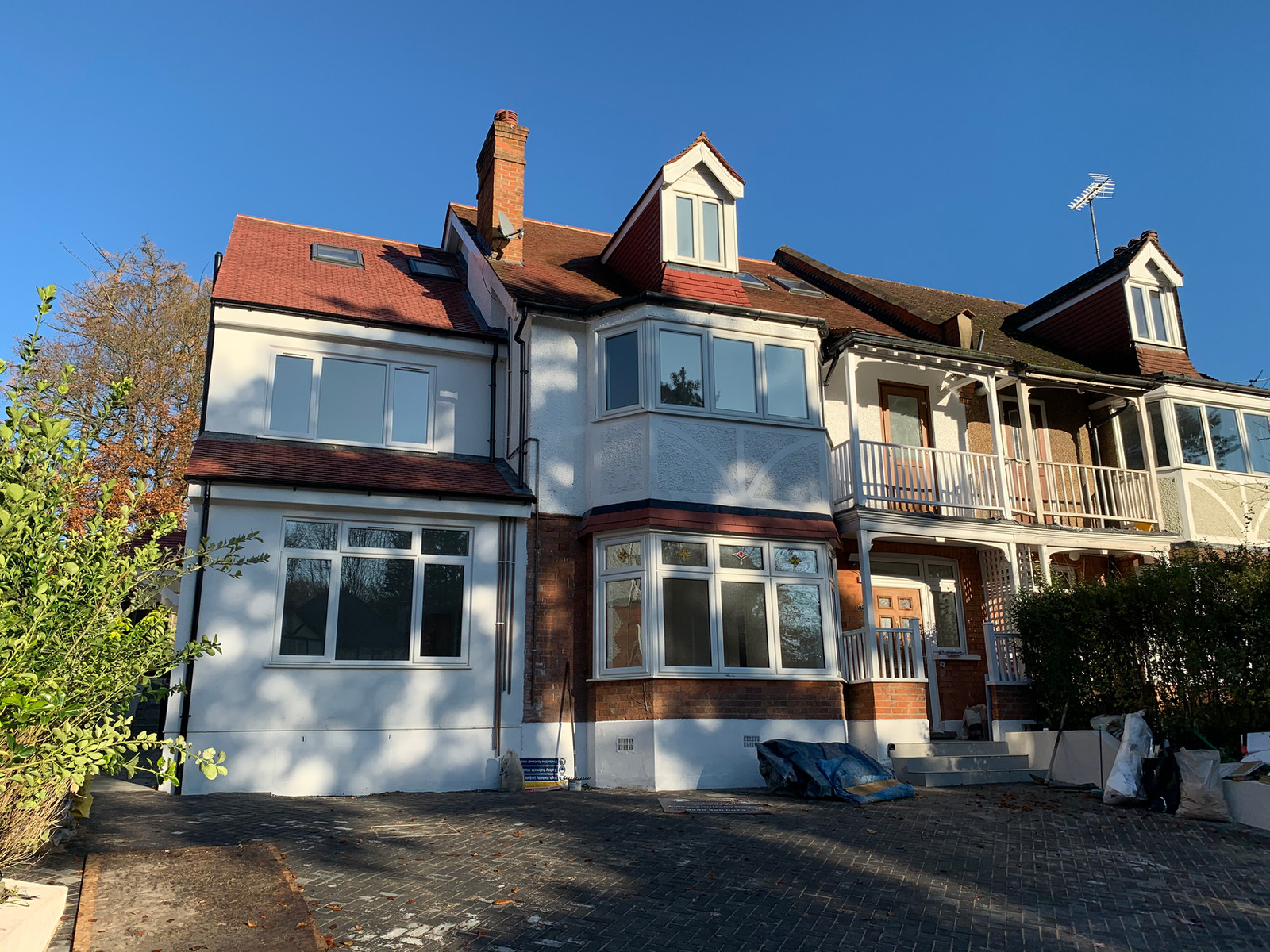
Finsbury Park, London
Residential Renovation & Extension
Why it is relevant: The Finsbury Park renovation illustrates careful coordination of a dense urban building and its neighbours. It is a residential project, not a takeaway approval or commercial extraction installation; no commercial approval outcome is claimed.
Comprehensive renovation including a new basement kitchen and dining space, infill side extension, and dormer loft conversion — delivering a four-bedroom, three-bathroom family home. High-performance glazing, skylights, and light wells ensure excellent daylight penetration throughout all levels. Brickwork matched sympathetically to the existing Finsbury Park façade.
View related projectsOfficial sources
General guidance for England, with a London focus. Requirements depend on the property, proposal and current rules. This is not a site-specific design, legal opinion, fixed quotation or guarantee of approval. Check the linked official guidance and obtain project-specific professional advice before acting. Last reviewed .
Applying this to your property?
Tell us about the building and what you want to achieve. We will reply with how we would approach it and a fee proposal.